Guides
NFC vs QR for Tipping: Which One Should You Actually Print?
One is faster, one is universal, and they cost very different amounts to deploy. Here is how to choose — and why most venues end up printing both on the same card.
Tap To Tip · 11 August 2026 · 5 min read
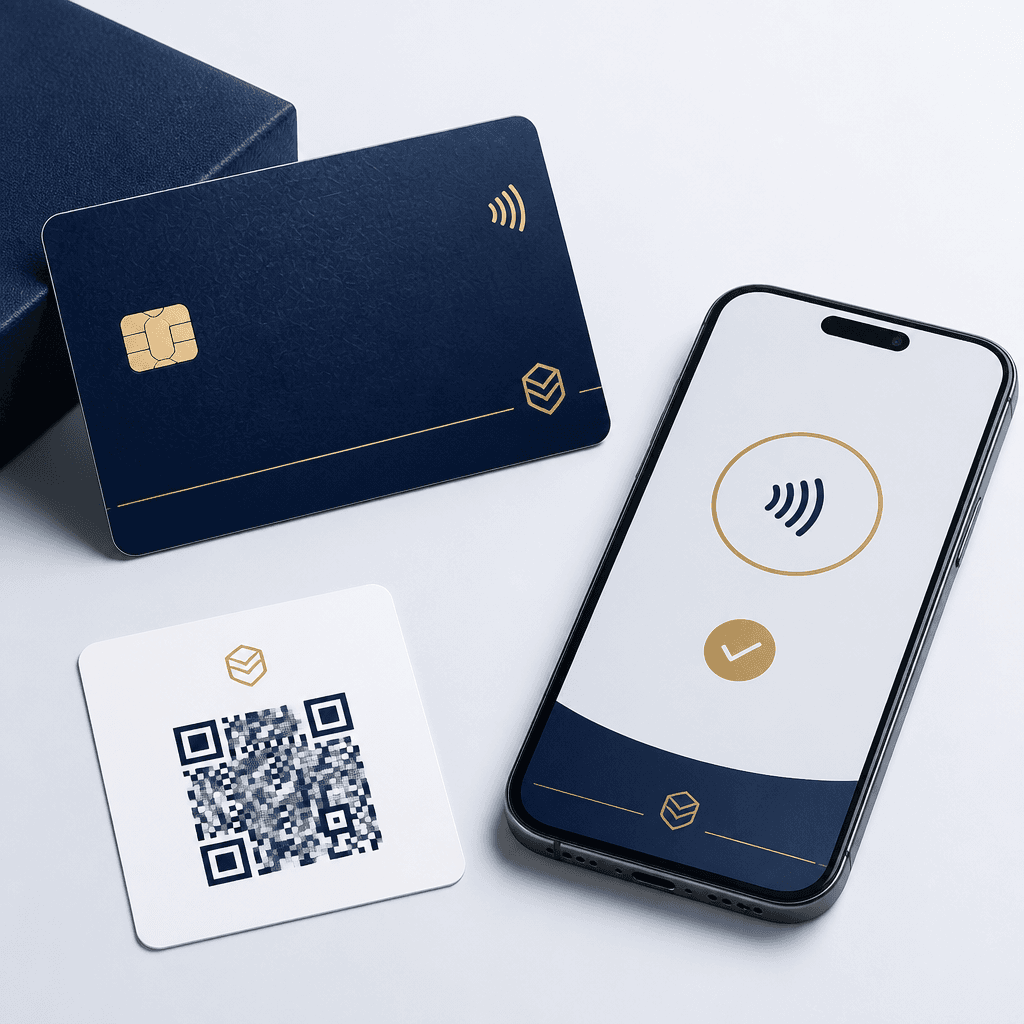
Both open the same page. The difference is entirely in how the guest gets there, and that difference decides whether they get there at all.
Speed
NFC is faster, and the gap is bigger than it looks on paper. A tap is one motion with the phone already in hand. A scan requires opening the camera, framing the code, waiting for recognition and then tapping a notification. In a five-second valet handover, that difference is the whole interaction.
Device support
- NFC — every iPhone from the XR onward and effectively every Android handset in circulation, read from the lock screen
- QR — any phone with a camera, including locked-down corporate devices where background NFC reading is disabled
In practice NFC covers the overwhelming majority of guests in the UAE. QR covers the remainder, which is exactly why it belongs on the same card rather than instead of it.
Cost
A QR code costs nothing. It is ink on something you were already printing — a receipt, a menu footer, a bill folder. An NFC card has a per-unit cost because there is a chip in it.
Placement beats format
The most common mistake is arguing about NFC versus QR while printing either one somewhere the guest never looks. A QR code in the right place beats an NFC card in the wrong one every time.
- Bill folder — the strongest position in a restaurant, in either format
- Uniform badge — NFC, because the interaction is short
- Hotel room — QR or NFC on a desk card; the guest has time either way
- Receipt and packaging — QR only, since there is no chip to embed
Get both on one card
Every Tap To Tip card carries an NFC tag and a printed QR code pointing at the same page.
See the cards →